- SEIKA Digital Image Corporation.
- ProductList
- Particle Image Analysis Method: Shadowgraph System
Particle Image Analysis Method: Shadowgraph System
Particle Image Analysis Method: Shadowgraph System
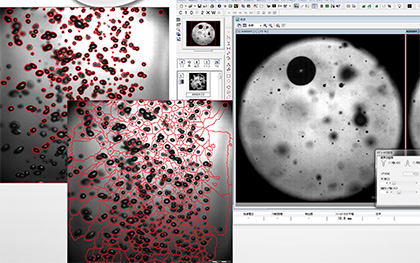
Background illumination of the object to be measured, that is, illumination from the background direction, makes the particle image emerge like a shadow play, and captures the particle image with a camera. Particle image analysis is performed with dedicated software based on the image of the particle that has become a shadowgraph.
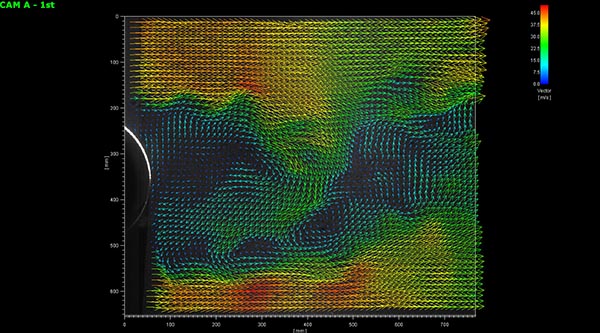
A method that separates grain boundaries and analyzes the number, average diameter, and shape of particles in an image based on a threshold value. , the perimeter, etc. are calculated. In addition, the flow velocity and velocity distribution of particles in the atomized state can be obtained by PIV analysis using dedicated software.
Table of Contents
- What is shadowgraph (image particle counting method)?
- We will select the most suitable laser/LED light source and high-speed/high-resolution camera according to the application.
- Image analysis using original software
- Usage
- Related product
We will select the most suitable laser/LED light source and high-speed/high-resolution camera according to the application.
(1) Time-series measurement type shadow graph system (high-brightness LED light source + high-speed camera)
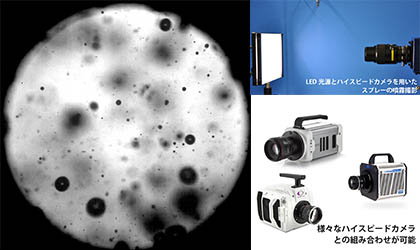
A combination of a high-sensitivity high-speed camera and high-brightness LEDs is used to measure phenomena in chronological order. It is possible to analyze the particle size and velocity of several m/second phenomena. *3
(2) Shadowgraph system for high-speed phenomena (double-pulse LED + high-resolution camera)
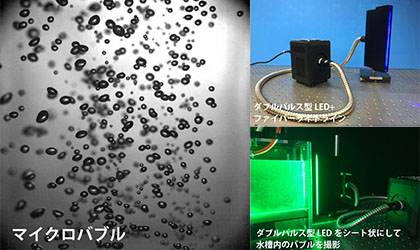
By emitting double pulses at short time intervals and synchronously shooting with a high-resolution camera, it is possible to analyze the grain size and velocity of high-speed phenomena of several tens of meters per second. *3
*3.The maximum speed shown is a reference value. It actually depends on the angle of view.
(3) Fluorescence micro shadowgraph system (micro-area, high-speed phenomenon)
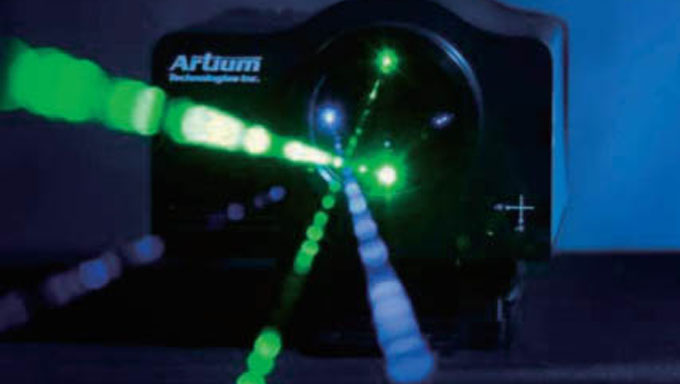
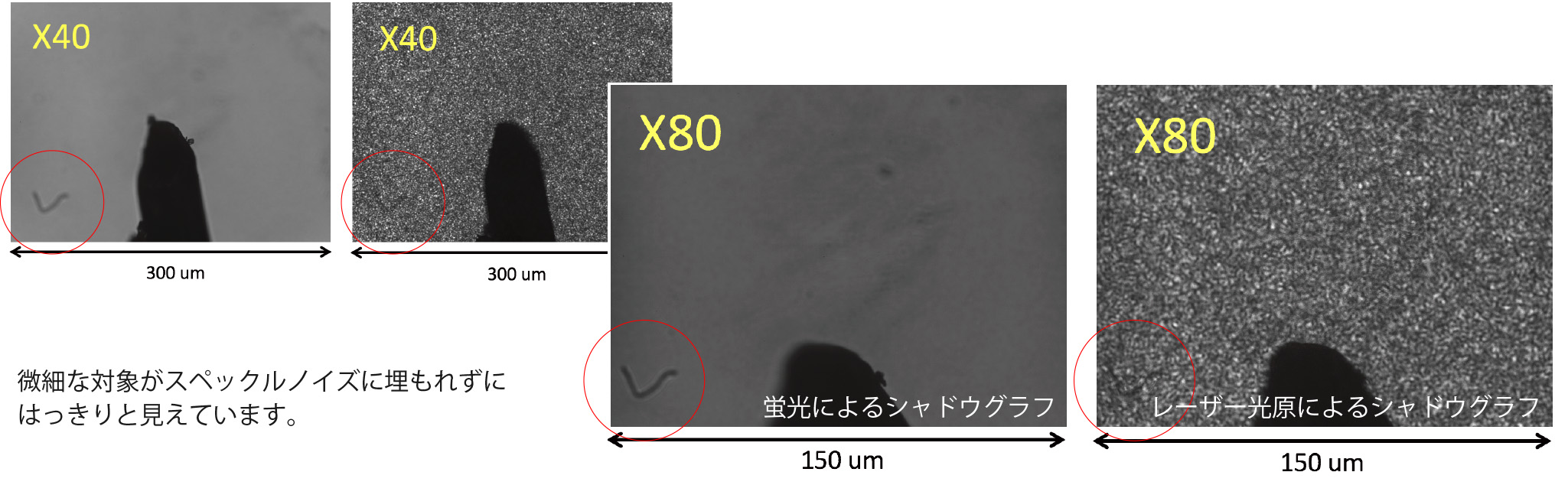
By using laser-induced fluorescence, speckle noise is suppressed, and it was developed for the purpose of visualizing, photographing, and acquiring measurement data, especially for small areas and high-speed phenomena. It is possible to measure faster phenomena with higher accuracy than ordinary shadowgraph systems.
Key Point
- micro area
- high speed projectile
- high resolution
- High precision
Advantages of fluorescence micro-type shadowgraph: Clear images without speckle noise can be captured
example
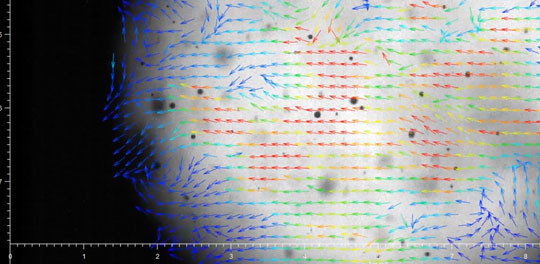
Visualization of bubble flow generated in oil
Shadowgraph shooting of air bubbles generated inside the oil
In addition to particle size and shape analysis, flow velocity and velocity distribution can be measured by PIV analysis. Acquisition of time series data is also supported.
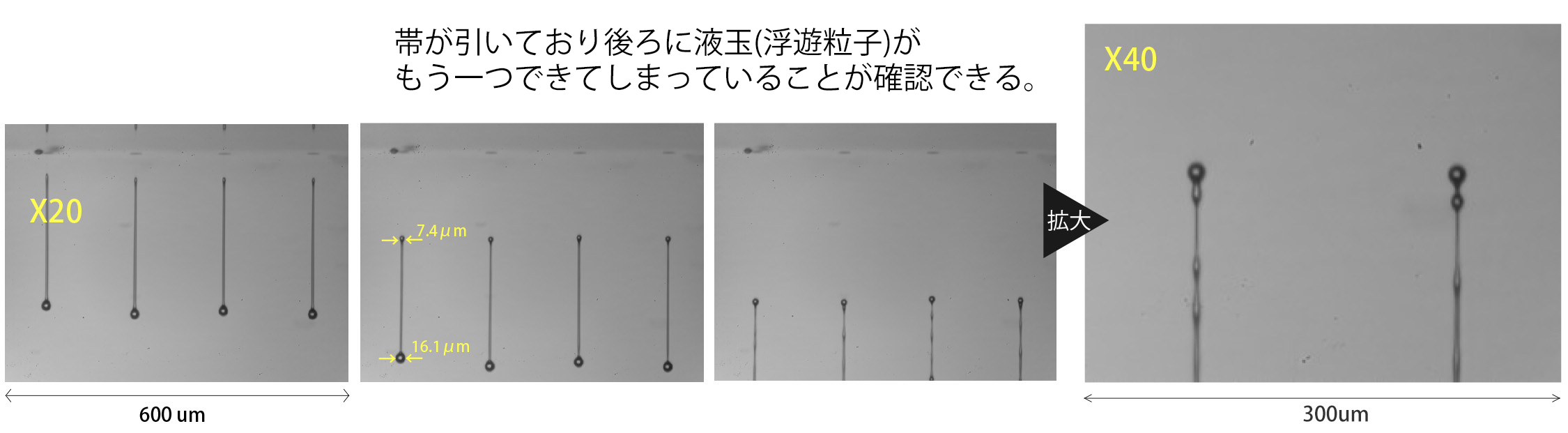
Ink ejected from an inkjet
Freeze photography of fine areas and high-speed phenomena: A wide working distance can be obtained because a microscope lens is not used
Materials provided by Yamagata University Inkjet Research Center
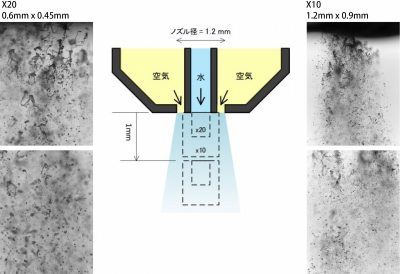
two-fluid nozzle
A function that divides an image into "Voronoi regions", which are commonly used to evaluate the degree of dispersion of particles in an image, and performs area measurement.
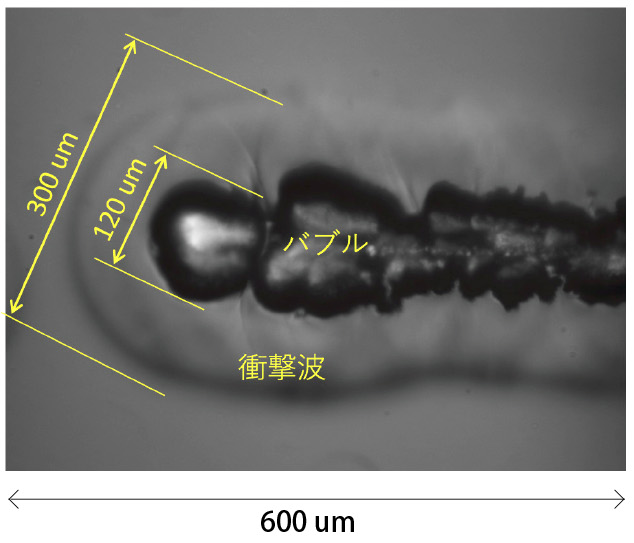
Microbubbles generated by laser breakdown in water and shock waves propagating around them
(about 30 ns after breakdown)
Shock wave velocity in water: about 2,000m/sec
Recommended Applications for Fluorescence Micro Shadowgraph
- inkjet
- engine injector
- spray
- Thermal spraying, welding, etc.
- Micro area and high speed phenomenon
Configuration example of fluorescence micro-type shadowgraph system equipment
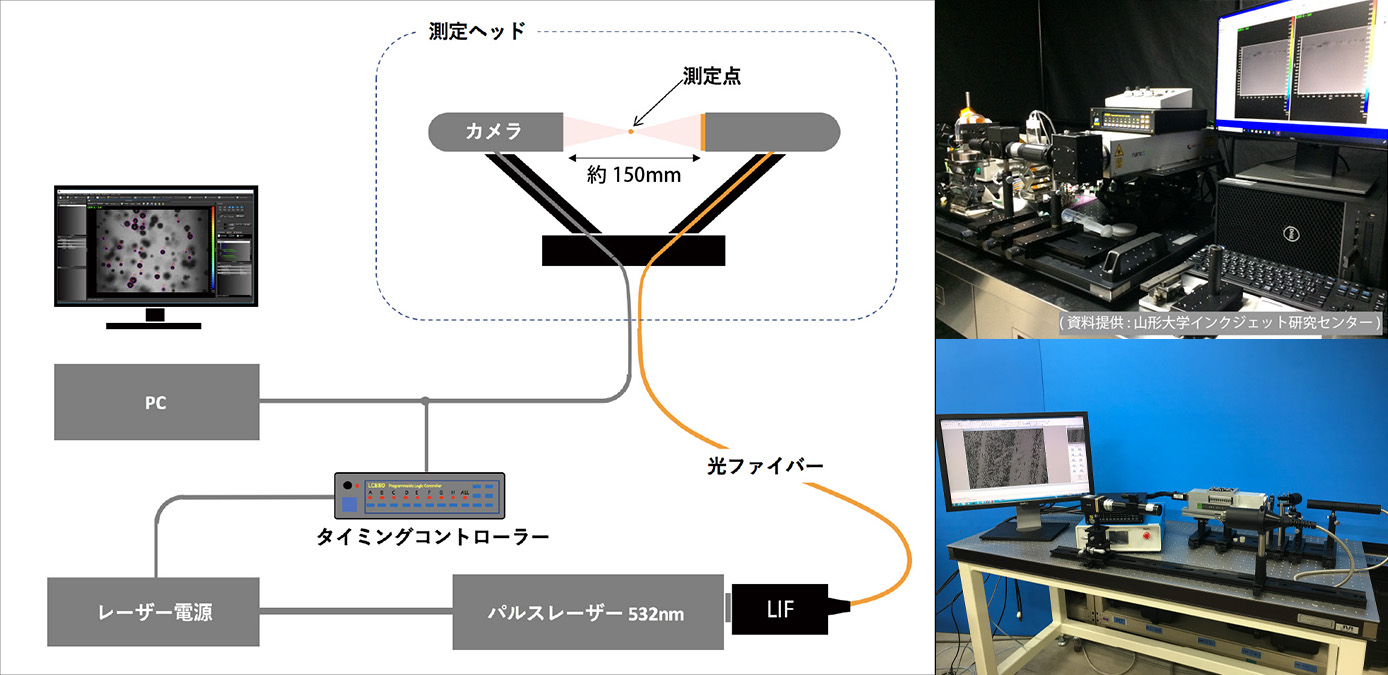
Image analysis using original software
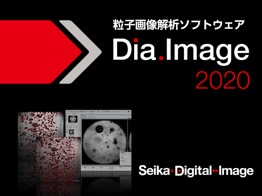
Particle image analysis and measurement software "Dia.Image"
- Particle measurement and statistical data calculation
- particle analysis data analysis
- high resolution
- Automatic processing macro tool
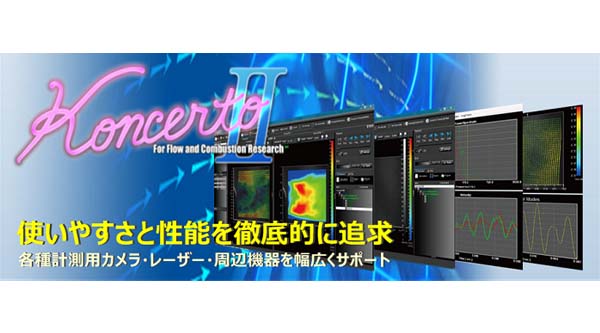
PIV analysis software "KoncertoⅡ"
- Collective control of hardware
- Vector map calculation
Usage
- Contaminant inspection of fine particle products
- Continuous analysis of microbubble diameter
- Structural analysis of wafer array
- Inspection of foods (flavor ingredients, flour, solid powder, etc.)
- Inspection of paints (pigments, sprays)
- Flow of air bubbles inside oil, continuous analysis of flow velocity distribution (option, PIV analysis)
- Fluid inspection of cavitation in piping
- Inspection of metal powder, carbon particles, activated carbon, photocatalyst (titanium oxide), ceramics
- Electrode material inspection