- SEIKA Digital Image Corporation.
- ProductList
- Non-contact strain/displacement measurement Digital image correlation method: DIC system
Non-contact strain/displacement measurement Digital image correlation method: DIC system
Non-contact strain/displacement measurement Digital image correlation method: What is the DIC system?
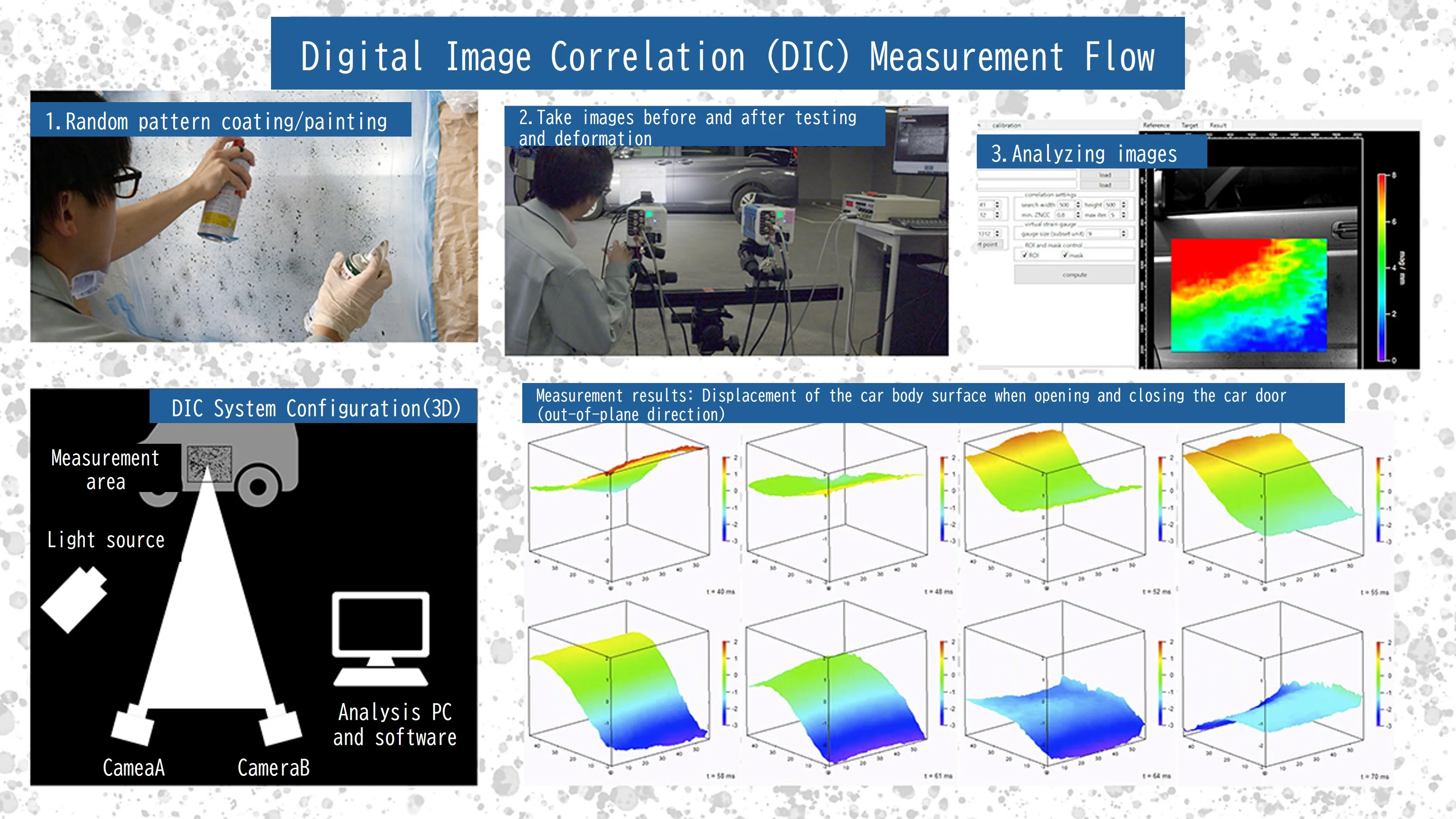
The digital image correlation method (DIC) is to give a random pattern called a speckle pattern to the surface of the measurement object by painting, etc., measure the strain and displacement by analyzing the image before and after deformation, and visualize the strain. This method is also called DIC, which stands for Digital Image Correlation. Unlike strain gauges, it analyzes strain and displacement by image analysis, so it is possible to visualize strain in plane and three-dimensional directions without contact.
Seika Digital Image has a development system for sDIC, which is DIC software, and is good at proposing systems that meet customer needs.
By performing sub-pixel interpolation, it is a highly accurate measurement method with a displacement resolution of 1/10 to 1/100 pixel, and is a technology that has been attracting attention in recent years. By using the sDIC system, it is possible to quantify the strain and deformation of an object in a non-contact, non-destructive manner. Also, by using a high-speed camera, it is possible to analyze high-speed phenomena and vibrations.
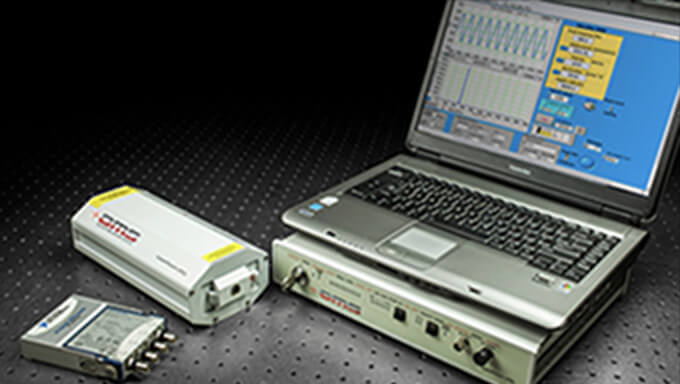
"sDIC 2D" uses one camera for two-dimensional (xy) analysis, and "sDIC 3D" uses two cameras for three-dimensional (xyz) analysis including the depth direction. In addition to stand-alone software for those who already have an image capture environment, we also offer a system that includes a camera/lens/fixing jig/lighting/analysis PC, etc.
According to customer needs, such as simultaneous measurement with equipment that we have cultivated for a long time in laser measurement such as PIV, simultaneous measurement with other equipment such as laser vibrometers and SEM images (mechanical characteristics by nanoindenter) handled by our company. We will make a proposal in the form.
System list
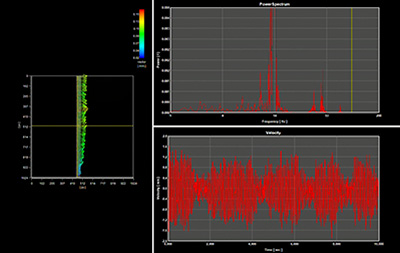
Evaluate XY two-dimensional displacement/strain using one camera. SEM images can also be analyzed.
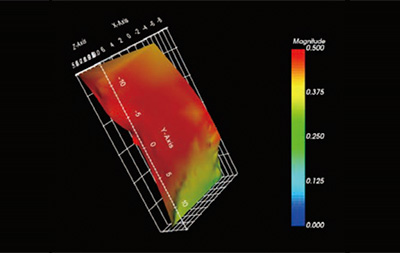
sDIC 3D three-dimensional analysiss
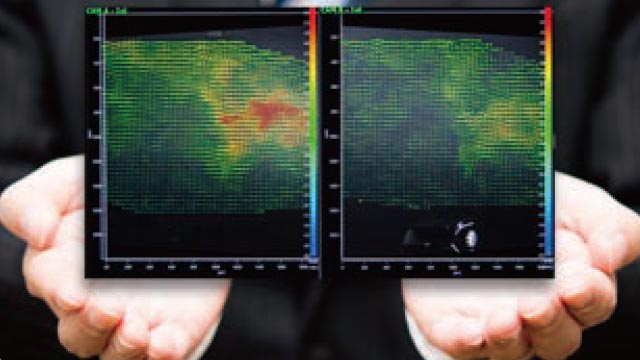
Evaluate XYZ 3D displacement/distortion using two cameras with parallax angle.
what's new


What is a digital image
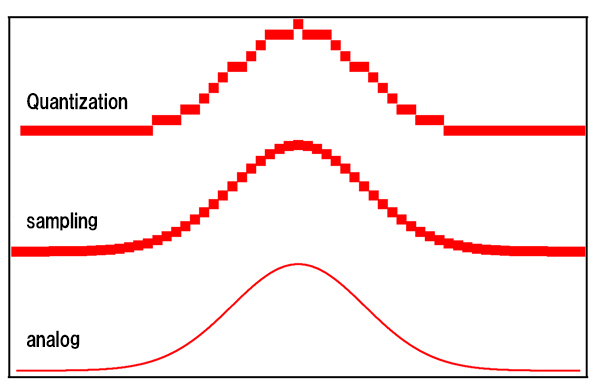
A digital image consists of a collection of pixels (or picture elements). In addition, the luminance value (brightness information) of each pixel is quantized and takes discrete values. Such digital images are often created by photographing the subject using an image sensor. The luminance value of the subject is sampled for each pixel of the image sensor and then quantized by the A/D converter. Information is lost in this process between pixels and between quantized luminance values.
The figure schematically shows how the information of one line with the subject changes by sampling and quantization. Object information is as smooth as a line on an analog display, but through sampling and quantization it becomes discrete values and some information is lost. Sampling fineness is determined by the number of pixels, and quantization fineness is determined by bit depth. As it happens in the acquisition of digital images, it is necessary to carefully consider the parameters when making a decision.
What is a speckle pattern
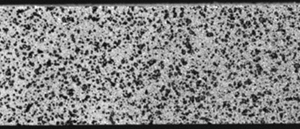
A random pattern like the one in the figure is called a speckle pattern. In the digital image correlation method, the deformation and distortion of the subject can be measured with high resolution by constructing a speckle pattern on the surface of the subject. There are a variety of methods for constructing the speckle pattern, such as painting or micro-substance spraying.
What is a subset
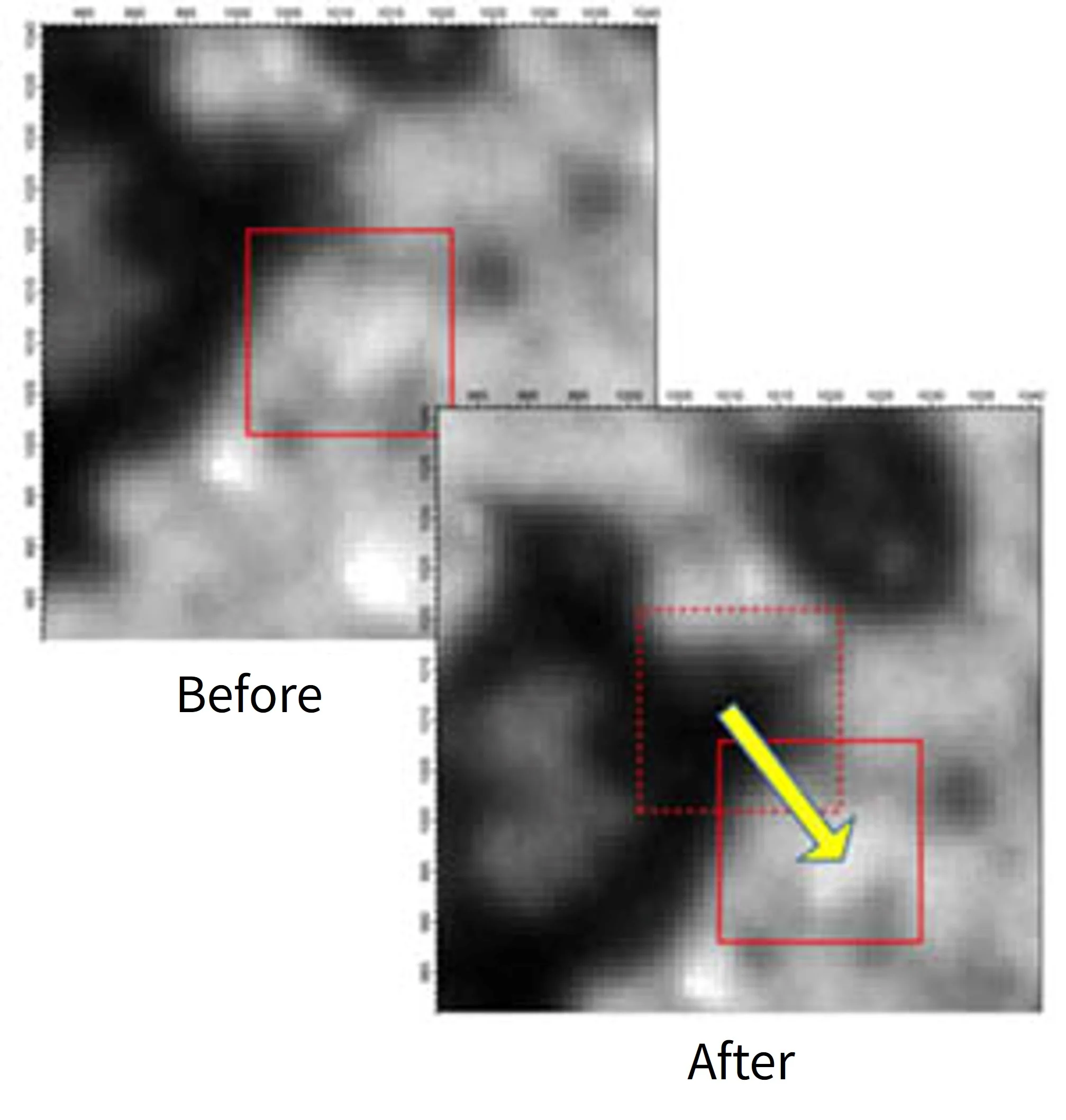
In the digital image correlation method, the subject is divided into minute areas called subsets, as shown in the red frame in the figure. Each subset is a measuring point. Deformation and strain are calculated by measuring the displacement of the subset. For strain/displacement detection, set the subset interval called step width and cut the mesh. By detecting the movement amount and direction of each subset, the displacement/strain distribution of the measurement target can be obtained. For strain calculations, the measurement length, called the gauge length, is specified in number of step widths.
Features of sDIC
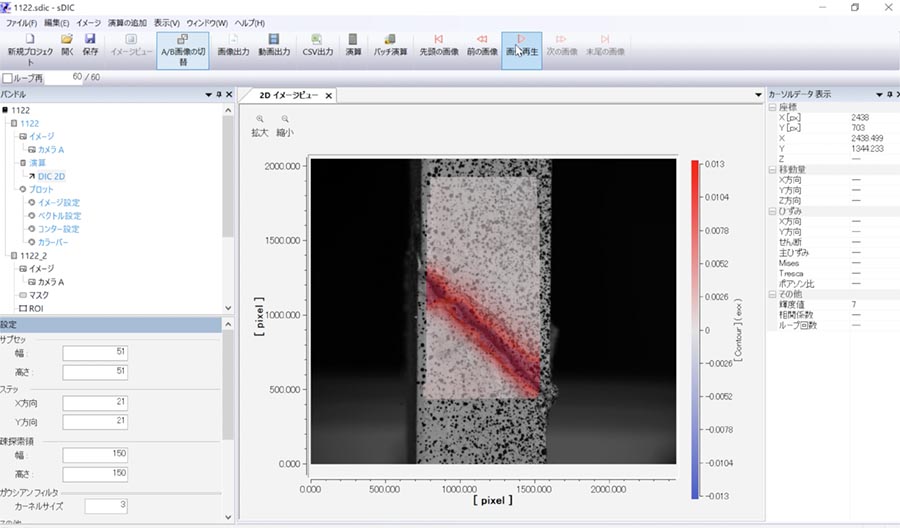
- Can measure coordinates, displacement, velocity, strain, shape and deformation
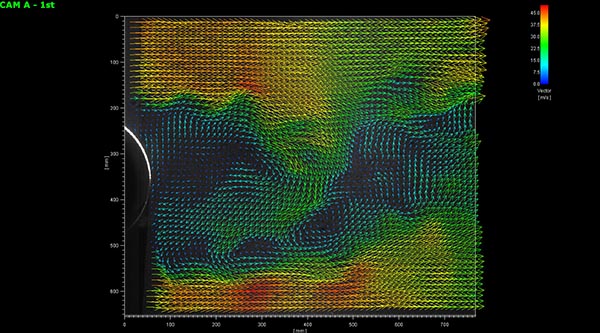
- Vector diagram/contour diagram display
- Supported image formats: TIFF images, etc.
- Easy to use, intuitive interface
- process tree structure
- Abundant post-processing functions (FFT analysis, POD analysis, etc.)
- Compatible with various high-speed cameras and high-resolution cameras
- Supports Japanese and English
- Offline analysis, online analysis
- 3D analysis support (option)
Introduction video
This is an introduction of the sDIC digital image correlation method strain measurement system.
This is an introduction video using sDIC software.
This is an introduction of the sDIC digital image correlation method strain measurement system.
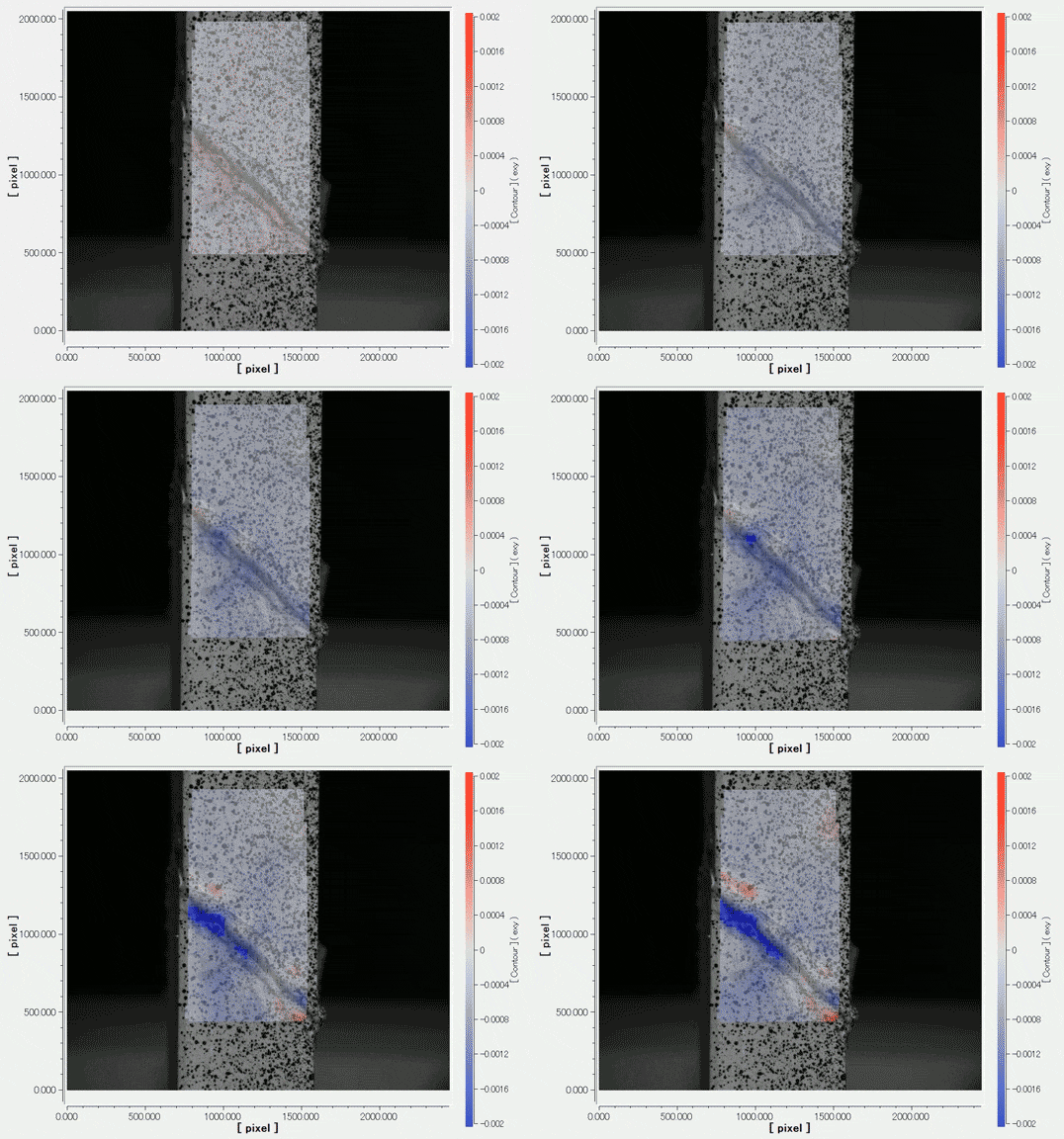
This is an example of shear strain measurement of wood bonding surfaces using sDIC software.
application
You can see by side scrolling.
 car |
 Materials/Materials |
 Civil construction |
 electrical/mechanical |
 Testing laboratories, analysis companies |
|
Car body in motion, interior Misalignment of the engine during operation, motor misalignment, case distortion Transmission vibration during operation, housing misalignment, distortion Swelling and temperature deformation when radiator is pressurized Deformation of brake pads during use Distortion of arm under crane load Tire material/deformation under load Bending and tensile testing of hydrogen tank material (CFRP) |
Various tests such as tension, compression, bending, and heat Various metals, solder, carbon materials Resin materials such as films and plastics Carbon material (CFRP) Composite material |
Deflection of bridge during vehicle traffic Vibration of handrails and wind plates due to wind Vibration and deformation of piping Evaluation of physical properties of anti-vibration rubber |
Vibration of air conditioner housing, distortion of compressor Deformation during destructive test when camera is dropped Wafer temperature change, destructive test analysis Temperature change of electronic circuit board, test analysis at pressurization Temperature change of capacitor |
Tension, compression, bending, vibration, temperature change high speed test Repeat test, fatigue test Microscopic examination under microscope, electron microscope |
Measurement example
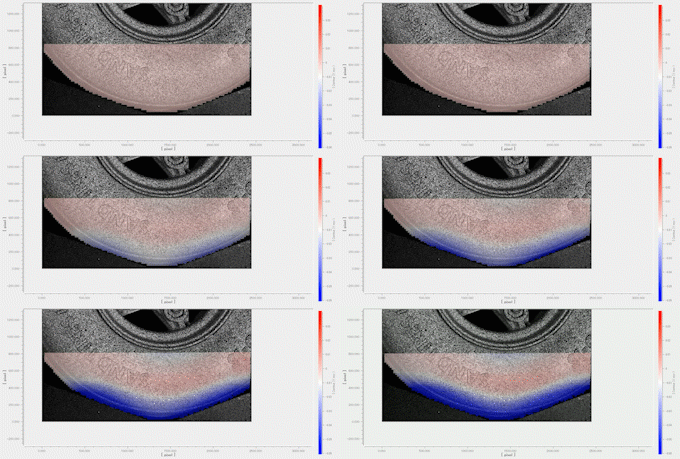
Displacement measurement by weight change of rubber tire (continuous display)
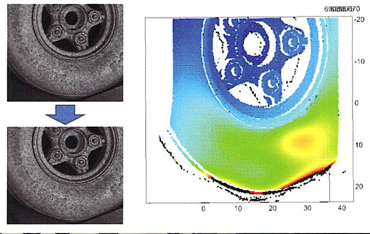
Displacement measurement by weight change of rubber tire (3D)
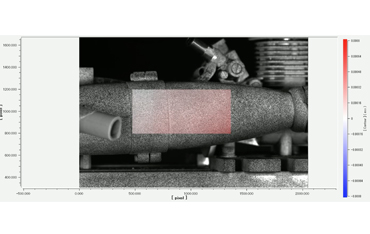
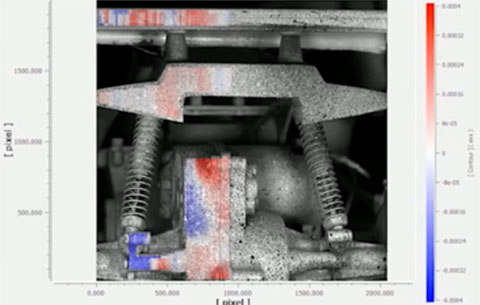
Lateral distortion at the rear of the model car
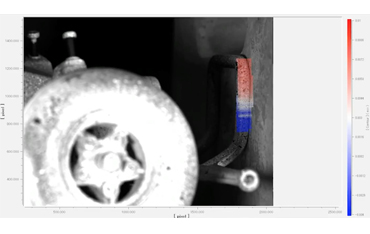
Bumper collision magnitude display
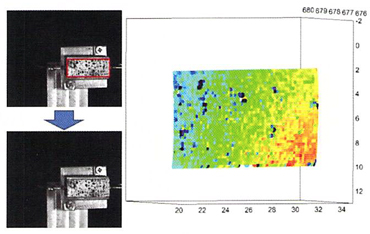
Displacement due to thermal expansion of resistor substrate (3D)
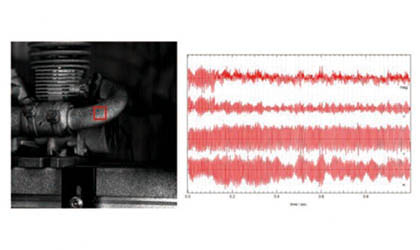
Engine vibration analysis
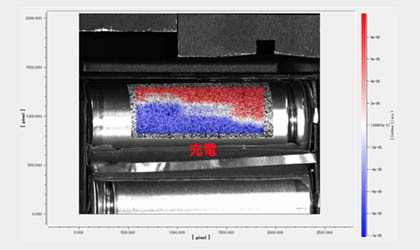
Shear strain distribution of expansion during battery charging
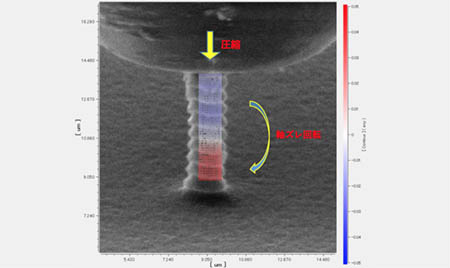
SEM image Shear strain distribution of pillar compression test
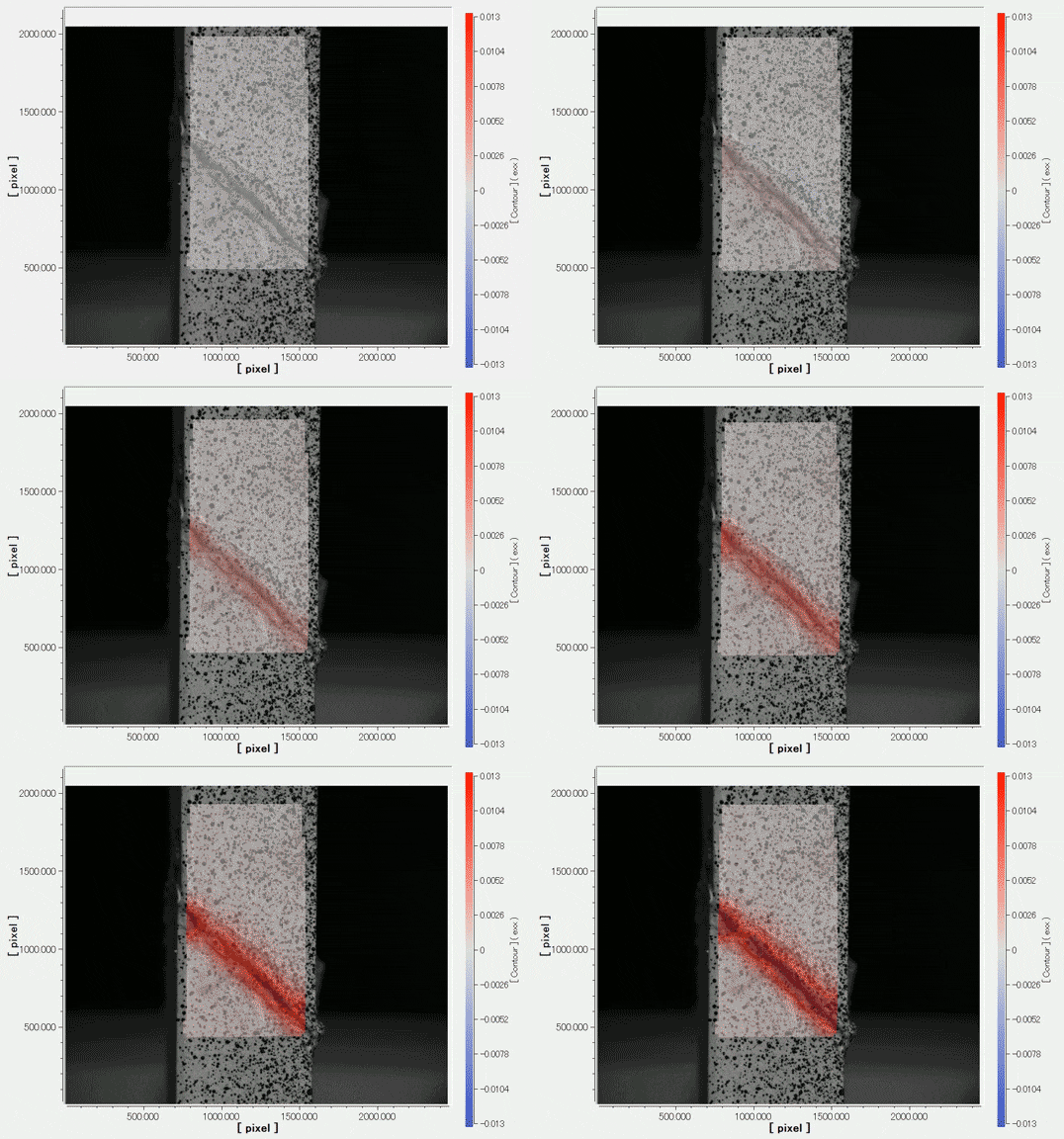
x-axis strain due to compression test of wood bonding surface
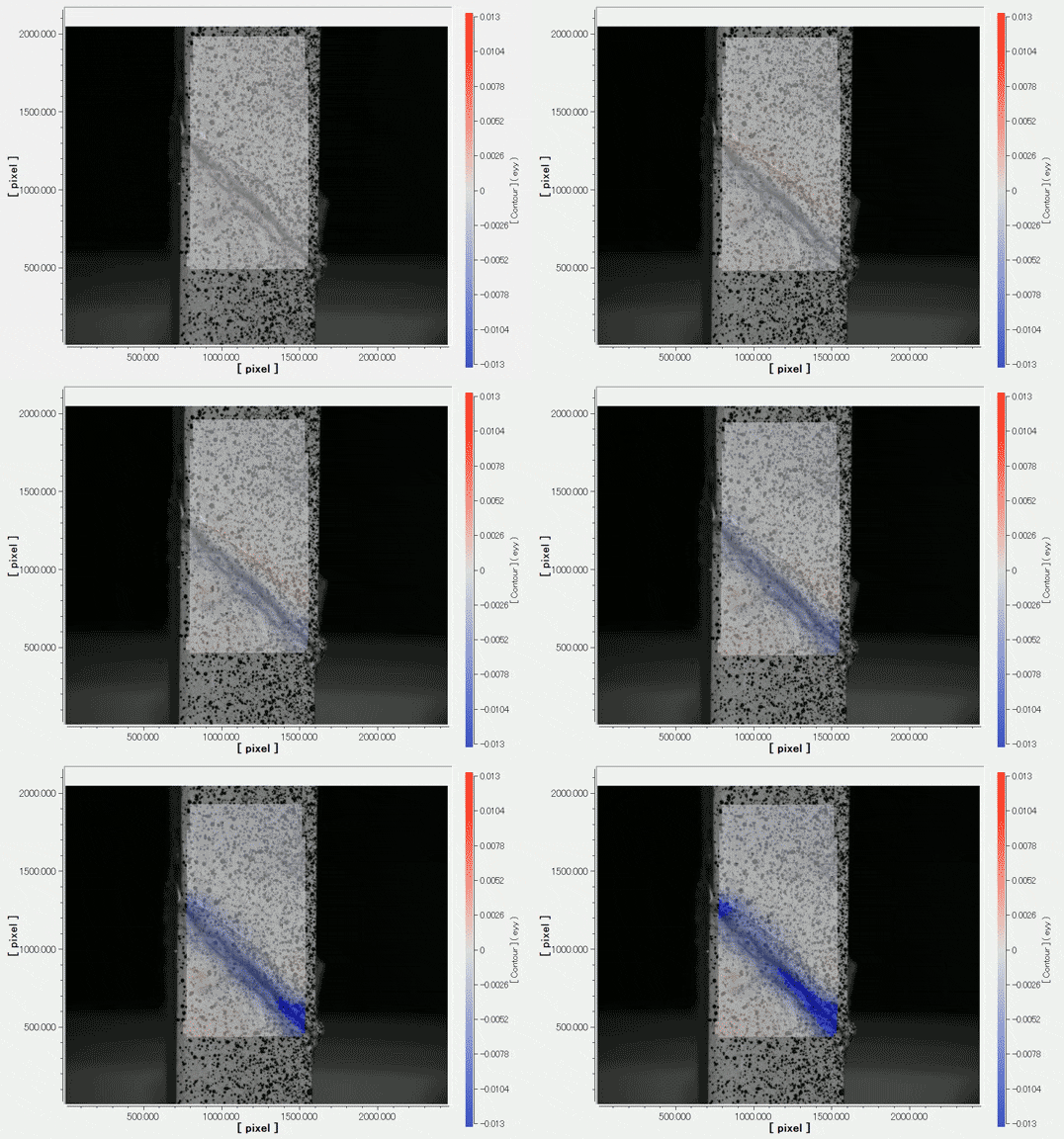
Y-axis distortion due to compression test of wood bonding surface